The Ultimate Guide to Get Verified Western Union Accounts: Step-by-Step
In today’s interconnected global economy, sending and receiving money across borders has become a regular part of life for millions of people. Whether you are supporting family members overseas, paying international freelancers, or managing business transactions, you need a reliable, fast, and secure platform. Western Union remains one of the oldest, largest, and most trusted money transfer services in the world.
However, to unlock the platform’s full potential, including higher transfer limits and fewer transaction holds, you must undergo the official identity verification process. If you are looking to get a verified Western Union account, you have come to the right place.
This comprehensive, 100% SEO-optimized guide will walk you through everything you need to know about getting your Western Union account verified, the documents required, the benefits of verification, and how to protect yourself from common scams.
H2: Why Do You Need Get Verified Western Union Accounts?
Before diving into the “how,” it is essential to understand the “why.” Western Union, like all legitimate financial institutions, operates under strict international financial regulations. These include KYC (Know Your Customer) and AML (Anti-Money Laundering) laws.
When you first create a Western Union account, you are typically granted a “basic” or “unverified” status. This allows you to send small amounts of money, but it comes with significant restrictions. Getting your Western Union account fully verified provides several major benefits:
H3: 1. Higher Transfer Limits
Unverified accounts usually have strict daily, weekly, and monthly sending limits. Depending on your country, an unverified user might only be able to send a few hundred dollars. Once your identity is verified, these limits increase dramatically—often allowing you to send thousands of dollars or up to $50,000 per transfer directly to bank accounts, depending on your transaction history and location.
H3: 2. Fewer Transaction Holds and Delays
Western Union’s automated security systems frequently flag transactions from unverified accounts for manual review. This can delay your transfer by hours or even days. A verified profile proves to Western Union that you are who you say you are, significantly reducing the chances of your money being held up in security checks.
H3: 3. Access to All Transfer Methods
Some transfer methods—such as direct bank-to-bank transfers, mobile wallet transfers, or funding transfers via certain credit/debit cards—may be restricted until your identity is confirmed. Verification unlocks the full suite of Western Union’s services.
H3: 4. Enhanced Account Security
When your account is tied directly to your government-issued ID, it becomes much harder for hackers or unauthorized individuals to take over your account. Verification acts as a foundational layer of security for your financial data.
H2: How to Get Verified Western Union Accounts Verified: Step-by-Step
The exact verification process can vary slightly depending on your country of residence, but the core steps remain consistent globally. Here is the standard process to get a verified Western Union account legitimately.
H3: Step 1: Create Your Basic Profile
If you haven’t already, you need to create a profile on the Western Union website or mobile app.
- Navigate to the official Western Union website or download the app from the Apple App Store or Google Play Store.
- Click on “Sign Up” or “Register.”
- Provide your basic information: First name, last name, email address, and a strong password.
- Crucial Tip: Ensure the name you enter exactly matches the name on your government-issued ID. Using nicknames or shortened names will cause your verification to fail later.
H3: Step 2: Initiate a Transfer (The Trigger)
In many regions, Western Union does not ask for full verification until you attempt to send an amount that exceeds the basic threshold.
- Start a money transfer.
- Enter an amount that triggers the verification requirement (this varies by region, but usually happens if you try to send over $1,000 to $3,000).
- The system will automatically pause the transfer and prompt you to verify your identity.
H3: Step 3: Choose Your Verification Method
Western Union typically offers a few different ways to verify your identity.
1. Online Identity Verification (The Fastest Method)
This is the most common and convenient method.
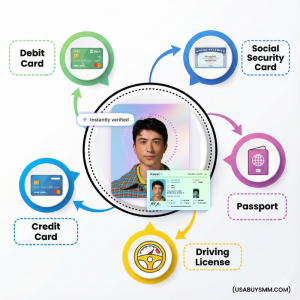
- You will be prompted to take a clear, well-lit photo of your government-issued ID (Passport, Driver’s License, or National ID card).
- You must take photos of both the front and back of the document.
- Next, you will be asked to take a “selfie” or a brief live video using your smartphone or computer webcam. The system uses biometric software to match your face to the photo on your ID.
- Result: This automated process usually takes anywhere from a few minutes to a few hours.
2. In-Person Verification
If you prefer not to upload documents online, or if the online system fails to read your ID, you can verify in person.
- Log into your account and select the in-person verification option.
- Print out the verification form or save the reference number on your phone.
- Visit a participating Western Union agent location (you can find these using the locator tool on their website).
- Hand your physical ID and the reference number to the agent.
- Result: The agent will verify your ID on the spot and update your account status.
3. Video Call Verification (Available in select European regions)
In some parts of Europe (such as Germany and the UK), Western Union uses third-party services like WebID or PostIdent for a quick video chat verification.
- You will be connected to a live agent via video call.
- You will be asked to hold your ID up to the camera and tilt it so the agent can see the security holograms.
- Result: Instant verification upon completion of the call.
H2: What Documents Are Accepted for Verification?
To successfully verify your Western Union account, you must provide valid, unexpired documentation. The documents must be clear, undamaged, and the edges of the document must be visible in the photo.
H3: Primary Identification Documents
You will generally need one of the following:
- Passport: Must be valid and current. (Highly recommended as it is universally accepted).
- Driver’s License: A standard, government-issued driver’s license. (Temporary or paper licenses are rarely accepted).
- National Identity Card: A state or national ID card.
- Residence Permit: If you are an expatriate or resident alien, a valid government-issued residence card is usually accepted.
H3: Proof of Address (Secondary Documents)
In some cases, especially if you are sending very large amounts, Western Union may ask for a secondary document to prove your residential address. This usually must be dated within the last 3 to 6 months.
- Utility bills (electricity, water, gas, broadband).
- Bank statements or credit card statements.
- Tax letters or official government correspondence.
- Note: Mobile phone bills are frequently rejected as proof of address.
H2: Troubleshooting: Why Was My Verification Denied?
Sometimes, despite your best efforts, your verification might be rejected. Here are the most common reasons why this happens and how to fix it:
H3: 1. Poor Image Quality
The number one reason for rejection is that the photos of your ID were blurry, obscured by glare, or the edges were cut off. The Fix: Retake the photos in natural daylight. Do not use the camera flash, as it creates a glare on the plastic of the ID. Ensure all four corners of the document are visible.
H3: 2. Name Mismatch
If you registered your account as “Tom Smith” but your passport says “Thomas Edward Smith,” the automated system will reject the verification. The Fix: You may need to contact Western Union customer support to update the name on your profile to match your ID exactly before reapplying.
H3: 3. Expired Documents
Western Union cannot accept expired driver’s licenses or passports under any circumstances due to financial regulations. The Fix: You must renew your government documents before you can get a verified Western Union account.
H3: 4. VPNs and IP Discrepancies
If your ID says you live in Canada, your profile address is in Canada, but you are using a VPN that makes it look like you are logging in from Nigeria or Russia, the fraud system will automatically lock the verification attempt. The Fix: Turn off all VPNs and proxy servers when creating and verifying your account.
H2: The Hidden Dangers of Buying “Pre-Verified” Western Union Accounts
When people search for “Get Verified Western Union Accounts,” they are sometimes looking for shortcuts—specifically, buying accounts that have already been verified by someone else on the dark web or through illicit forums.
We cannot stress this enough: Do not buy pre-verified Western Union accounts. This is not only a violation of Western Union’s Terms of Service, but it is also highly illegal and dangerous for several reasons:
H3: 1. Complicity in Identity Theft
Accounts sold online are almost always created using stolen identities. By purchasing and using one of these accounts, you are participating in identity fraud and money laundering. If law enforcement tracks the transactions, you could face severe criminal charges.
H3: 2. The Seller Retains Control
The person who sells you the account still has the original identity documents and the original email address used to set it up. They can wait until you load money into the account, contact Western Union to claim they “lost their password,” and steal your funds. You will have absolutely no recourse because the account isn’t in your name.
H3: 3. Sudden Account Freezes
Western Union’s security algorithms are incredibly advanced. They monitor login locations, device IDs, and typing patterns. If an account is created in the UK and suddenly accessed from the US to send large amounts of money, Western Union will freeze the account immediately. Any money inside will be locked, and since you cannot produce the ID to unfreeze it, your money is gone forever.
The Bottom Line: The only safe, reliable, and legal way to have a verified account is to go through the official process using your own legitimate details.
H2: Tips for Keeping Your Verified Account Secure
Once you have successfully navigated the Western Union identity verification process, it is your responsibility to keep the account safe. Treat your Western Union account with the same level of security as your primary bank account.
H3: Enable Two-Factor Authentication (2FA)
Always enable 2FA on your account. This means that even if a hacker guesses your password, they cannot log in without also having access to your mobile phone to receive a temporary security code.
H3: Beware of Phishing Scams
Scammers often send fake emails pretending to be Western Union, claiming your account needs “re-verification.” They will provide a link to a fake login page to steal your credentials. Never click on links in unexpected emails. Always navigate directly to westernunion.com by typing it into your browser.
H3: Only Send Money to People You Know
Western Union explicitly warns against sending money to strangers. Once a cash pickup is collected by the receiver, it is almost impossible to reverse the transaction. Never use Western Union to pay for online goods from unknown sellers, to pay “taxes” on lottery winnings, or to help a “romantic interest” you only met online.
H2: Western Union vs. Competitors: Is Verification Different?
If you are frustrated by the verification process, you might wonder how Western Union stacks up against other international money transfer services like Wise, Remitly, or MoneyGram.
The reality is that all legitimate money transfer services require identity verification due to global financial laws.
- Wise (formerly TransferWise): Also requires photo ID and a selfie. They are known for strict verification but excellent exchange rates.
- Remitly: Operates in tiers. Lower tiers require minimal info, but higher limits require full ID verification similar to Western Union.
- MoneyGram: Western Union’s primary traditional competitor. Their process—both online and in-person at agent locations—is nearly identical to Western Union’s.
Switching providers won’t allow you to bypass ID verification if you want to send substantial amounts of money. Sticking with Western Union and completing the process is often the best choice for global reach.
H1: Frequently Asked Questions (FAQs) About Western Union Verification
H3: How long does Western Union verification take?
If you use the automated online system with high-quality photos of your ID, verification can take as little as 5 to 10 minutes. In some cases, if manual review is required, it can take 1 to 3 business days.
H3: Can I use Western Union without being verified?
Yes, you can use Western Union without full verification, but you will be restricted to “guest” sending limits, which are usually very low (e.g., under $1,000 depending on the country). Furthermore, certain receiving options will be blocked.
H3: Does Western Union do a credit check when verifying my account?
No. Identity verification is purely to confirm your identity for Anti-Money Laundering (AML) purposes. It is a “soft check” of your identity, not a credit inquiry. It will not affect your credit score in any way.
H3: Why does Western Union need my social security number (SSN)?
If you are in the United States and attempting to send large amounts of money, Western Union may ask for the last four digits of your SSN. This is a federal requirement under the Bank Secrecy Act to prevent financial crimes.
H3: What if I don’t have a government-issued ID?
If you do not have a valid passport, driver’s license, or national ID card, you cannot fully verify a Western Union account. You will be restricted to lower sending limits, or you may need to rely on a trusted family member who has valid ID to process transfers on your behalf.
H3: Can I verify my Western Union account over the phone?
No. You cannot complete identity verification over a standard phone call because there is no way for the agent to securely verify physical identity documents. You must use the app, the website, or visit an agent location.
H3: Is my data safe with Western Union?
Yes. Western Union uses state-of-the-art encryption and strictly adheres to global data privacy laws (like GDPR in Europe). Your identification documents are transmitted securely and stored encrypted solely for compliance purposes.
H2: Conclusion
Getting a verified Western Union account is a straightforward process that is absolutely essential for anyone looking to send money internationally with safety, speed, and high limits. While it might seem like a slight inconvenience to snap photos of your ID, these regulations are in place to protect your funds and keep the global financial system safe from fraud.
Remember, never attempt to bypass the system by purchasing pre-verified accounts. Gather your valid ID, ensure you have good lighting for your photos, and follow the official steps outlined in this guide. Within minutes, you’ll be fully verified and ready to send money globally with peace of mind.